Sustainable Living at Home · Furniture
A Practical Guide to Choosing a Sectional That Lasts
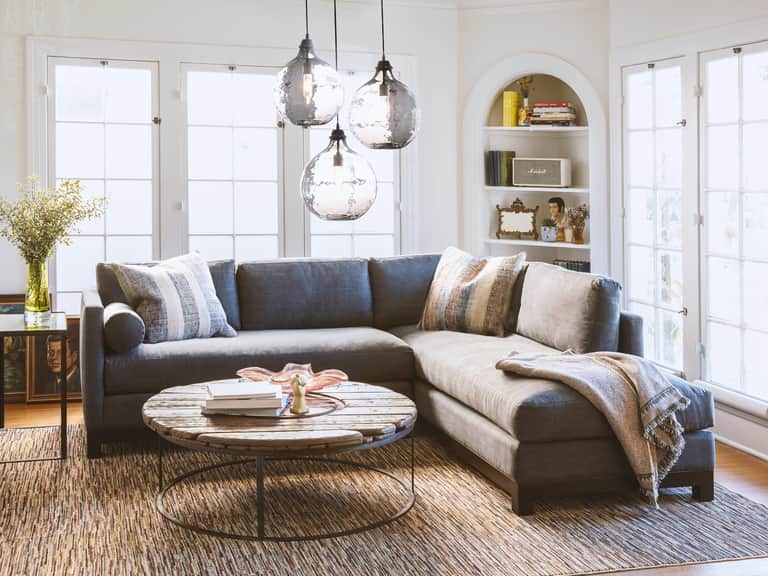
A sectional is not merely a large sofa with an unusually confident floor plan. It is a piece of furniture asked to absorb the ordinary weight of domestic life: the evening sprawl, the visiting relatives, the book left open, the dog who has quietly claimed the corner. Choosing one that lasts means looking past the showroom impression and asking how it is made, how it will fit, and what can be repaired when the years begin to show.
Published October 16, 2026
There is a particular optimism in buying a sectional. You imagine the room settled around it: enough room for everyone, a place to stretch out without negotiation, a comfortable center of gravity for evenings that have nowhere urgent to go. But a sectional is also a substantial commitment of materials, money, and space. If it wears out quickly, becomes uncomfortable, or cannot be repaired, its generous dimensions become part of the problem. A durable choice is therefore not just about finding a frame that feels sturdy on delivery day. It is about selecting a piece that can keep doing its job as the household changes.
The most useful questions are less glamorous than the color of the upholstery. What supports the seat? Are the cushions replaceable? Can the fabric be cleaned—or recovered? Are the component pieces likely to fit the room if you move? The answers can tell you more about the future of a sofa than a polished description full of assurances about timelessness.
This is a practical guide to evaluating sectionals through a sustainability-minded lens. The point is not to pursue a perfect, impact-free purchase; furniture has a material footprint, and no single label erases it. The more attainable goal is to choose carefully, maintain the piece, and keep it in use for as long as it remains safe, comfortable, and useful.
Begin with the room, not the showroom
A sectional can appear compact in a large showroom and turn formidable in an apartment living room. Before comparing upholstery or cushion fill, measure the room and the routes the furniture must travel. Record the available wall lengths, the distance to doors and windows, and the location of radiators, outlets, vents, and built-in storage. Then measure the entrance: hallway turns, stairwells, elevator doors, and the narrowest point between the street and the room.
Product dimensions deserve a close reading. “Overall width” may not tell you how much floor space the chaise or bumper requires, while seat depth and arm height affect how the piece feels in use. A sectional that fits on paper can still obstruct a walkway or make a room difficult to navigate. Leave a clear path through the space and consider how people will reach the seats without stepping around a coffee table like a small obstacle course.
Think, too, about how the room is used. A household that hosts often may need several seats that are easy to access; someone who likes to lie down may value a longer chaise. A modular configuration can offer flexibility, but only if the parts connect securely and the arrangement makes sense for the room. If the sectional is built from multiple units, ask whether those units can be rearranged later, and whether additional pieces remain available. Availability can change, so a future expansion should not be the only reason the layout works.
Finally, consider the possibility of moving. A one-piece sectional can be difficult to maneuver through tight doorways. Separate components may be easier to transport, though they can introduce gaps or shifting if their connectors are weak. A floor plan drawn to scale—or even a simple outline made with painter’s tape—can make the decision less romantic and more accurate. That is generally a useful trade.
Look beneath the upholstery
The frame and suspension are the quiet structure of a sectional. They carry the loads that the fabric and cushions disguise. Ask what the frame is made from, how its joints are assembled, and whether the manufacturer provides useful construction details. Hardwood is often used in durable frames, but the word alone is not a guarantee. Joinery, bracing, and workmanship matter; a well-designed frame is more than a list of materials.
When possible, inspect the underside or request a clear explanation of the construction. A frame should feel stable rather than twist or creak under ordinary use. The arms and corners should not wobble when gently pressed. Ask how the sections are joined and whether the connectors can be tightened or replaced. If the sectional has a wood base or exposed legs, find out whether those elements are removable and whether replacement parts are available.
Under the seat, the suspension system helps determine whether support remains even over time. Common approaches include sinuous springs, webbing, and other engineered support systems. Each can perform well when appropriately designed and installed; the label is only a starting point. Ask what the manufacturer means by its support description, how the system is attached to the frame, and whether it can be serviced if it sags or breaks.
For example, the Cisco Home Cosmo Sectional is described as having an FSC-certified hardwood frame and a “No-sag” support system using sinuous springs with additional runners. Those details make it possible to ask more specific questions about frame construction, spring attachment, warranty coverage, and repair access. They do not, by themselves, establish how long any individual sectional will last. Product claims are most useful when they lead to verifiable details rather than serving as a substitute for them.
Check the warranty, but read its limits. A warranty may cover the frame for a different period than the suspension, cushions, or upholstery, and it may exclude damage from misuse or routine wear. Ask who handles a repair, whether the piece must be shipped, and what costs remain the owner’s responsibility. A long warranty can be reassuring; a clear process for obtaining parts and service is often more revealing.
Cushions are meant to change—and to be changed
Cushions influence comfort more directly than nearly any other part of the sectional, and they are also among the parts most likely to show wear. Sit on the sofa for more than a moment. Notice whether the seat feels supportive or merely soft, whether the front edge presses against the legs, and whether the back cushions hold you at a comfortable angle. A plush first impression can conceal a seat that bottoms out or makes it difficult to rise.
Ask what is inside the cushions and how the filling is expected to behave. Foam, fiber, and feather or down blends have different maintenance needs and different ways of settling. No material is immune to compression. What matters is whether the cushions can be turned, rotated, refilled, or replaced. A sectional with removable cushions gives you more options than one whose seating is permanently attached, although removable covers alone do not guarantee that replacement covers or cushion inserts can be ordered.
Separate seat and back cushions allow wear to be redistributed. On a bench seat, the uninterrupted surface can look composed and make lounging easy, but it may be harder to rotate a single large cushion. Ask whether that seat cushion is replaceable and whether its dimensions and filling can be matched later. With loose cushions, check how readily they slip out of place and whether their covers have closures designed for repeated use.
Expect some change over time. Cushions may soften, flatten, or develop a familiar impression in the places people prefer to sit. Regular rotation and careful fluffing can help distribute wear, according to the cushion design and care instructions. If the maker offers replacement inserts or a refurbishment service, that is a meaningful advantage: a tired cushion need not sentence a sound frame to disposal.
Choose upholstery for the life you actually have
Fabric selection often begins with color and hand—the way a material feels to the touch—but durability also depends on fiber, weave, construction, finish, and maintenance. A tight, sturdy weave may resist everyday abrasion better than a delicate surface, while a textured fabric can sometimes disguise small marks. Neither texture nor fiber name guarantees performance. Request the manufacturer’s specifications and care guidance, and ask how the fabric has been tested for abrasion, pilling, and colorfastness.
Think about the likely sources of wear. Sunlight can fade many fabrics. Pets may catch a loosely woven surface with claws; children may turn a pale seat into a record of snacks and craft projects. If spills are part of ordinary life, a fabric that can be cleaned at home—or covers that can be removed and laundered, where the manufacturer allows it—may be more practical than a material that requires specialized care. Confirm whether the covers are truly removable, whether they can be washed, and whether cleaning can cause shrinkage or color change.
Leather has its own care requirements, as do natural and synthetic textile blends. A material that is easy to wipe clean may not be easy to repair, and a fabric that wears attractively may still need professional cleaning. The sensible choice is the one whose upkeep you can realistically follow. Care instructions that depend on constant vigilance tend to meet the same fate as other ambitious domestic plans.
Fabric samples are worth ordering. Look at them in daylight and in the room’s evening light; rub the surface gently, observe how it catches lint, and compare its color with flooring, curtains, and other furnishings. If there is a pet or a child in the household, consider putting the swatch through ordinary, manufacturer-approved handling before committing. Ask whether the fabric can be reordered later for repairs or replacement cushions. An upholstery option may be attractive now but unavailable years from now, so keep the fabric name and specification with the purchase records.
Claims such as “performance,” “eco-friendly,” or “non-toxic” need context. Ask what the claim refers to, whether it applies to the fabric, its finish, or the entire piece, and whether supporting documentation is available. If environmental certifications matter to you, check the scope and standards behind them rather than relying on a logo or broad phrase. Clear information is more useful than reassuring adjectives.
Repairability is part of durability
Even carefully made furniture can suffer an accident or wear unevenly. A seam can split, a spring can loosen, a cushion can lose support. Durability is not simply the ability to avoid damage; it is also the ability to recover from it. Before buying, ask whether the manufacturer sells replacement cushion inserts, covers, legs, connectors, and hardware. Find out whether a local upholsterer or furniture repair professional can work on the construction without specialized proprietary tools.
Modular designs may make certain repairs easier, because a damaged section can sometimes be addressed without replacing the whole piece. But modularity is not automatically a virtue. The joining mechanism should hold the sections together during use, and the maker should explain how it can be adjusted or replaced. If a component fails, can you order one section, or must you purchase an entire new set? The distinction can have a large effect on the sectional’s useful life.
Ask for written care and repair information, and retain the order confirmation, model name, fabric code, and any warranty documents. A small folder—physical or digital—can save time when the original sales listing has disappeared. If the upholstery is custom, preserve a swatch if one is supplied. Knowing the exact fabric and finish may help a repair professional find a close match.
Repairability also changes how you think about cost. A low purchase price can be misleading if a single worn cushion or broken connector renders the entire sectional unusable. A higher initial price is not proof of value either; it becomes more compelling only when construction, service, and replacement options support a longer period of use. Compare what is included and what happens after the sale, not just the number on the tag.
A sustainable choice is a maintained one
Furniture production requires materials, energy, and transport. Keeping a sectional in use longer can reduce the need to replace it, though the precise environmental benefit depends on how it was made, how it is maintained, and what happens at the end of its life. This is why sustainability-minded furniture decisions often begin with ordinary questions of fit, quality, and repair rather than with a single supposedly decisive label.
Certifications can help clarify parts of a product’s story, but they need to be read carefully. A certification may address the sourcing of wood, a particular chemical standard, or a manufacturing practice; it does not necessarily apply to every component of the sectional. Ask which materials are covered and what documentation is available. If a maker offers recycled or reclaimed components, request details about where they are used and how they are finished.
Consider the piece’s eventual next life, too. A neutral, adaptable design may be easier to move into another room or pass along if your needs change. Replaceable covers and cushions can give a frame a second chapter. If the sectional must leave your home, donation, resale, or reuse may be possible if it is clean, safe, and in serviceable condition. Planning for longevity is a practical form of waste prevention, not a promise that the furniture will remain fashionable forever.
Everyday care that makes a difference
Start with the care instructions supplied by the manufacturer. Upholstery fibers, finishes, and cushion materials differ, and a well-intended cleaner can leave a stain, damage a coating, or alter the color. Vacuum the crevices and surface at an interval suited to the room, using an attachment appropriate for the fabric. Address spills promptly according to the specified method, blotting rather than rubbing when the instructions call for it.
Rotate or rearrange cushions where their design permits. This spreads the pressure of daily use and can help prevent one favorite seat from aging much faster than the others. Avoid sitting on the arms or placing excessive weight on the back; frames are engineered for particular kinds of support, and sofas rarely benefit from being treated as ladders. Keep the sectional away from persistent direct sunlight or heat sources when possible, since these can contribute to fading or material deterioration.
For a sectional with several connected pieces, check the connectors occasionally. A loose connection can cause sections to drift apart, putting strain on the joining points and making the seating feel unstable. Follow the maker’s guidance on tightening or maintenance rather than improvising with hardware that may not fit. If a squeak, sag, or wobble appears, investigate early. Small repairs are often simpler than the damage that follows when a problem is ignored.
Questions to ask before you commit
Good furniture research is not an interrogation; it is a way of making sure the sectional suits the household that will live with it. A knowledgeable seller should be able to answer practical questions or direct you to someone who can. Consider bringing this short checklist:
- What is the frame made from, and how are its joints assembled?
- What type of suspension supports the seats, and can it be repaired?
- Are the seat cushions and back cushions removable, reversible, or replaceable?
- Can replacement covers, cushion inserts, legs, or connectors be ordered?
- What does the upholstery care label permit, and what cleaning methods should be avoided?
- Which parts of the sectional are covered by the warranty, and for how long?
- Can an independent repair professional service the frame, suspension, or upholstery?
- Are environmental or material claims supported by specific standards or documents?
- What are the packed dimensions, and will each piece pass through the route into the room?
Notice not only what the answers say, but how specific they are. “Built to last” is a sentiment. A description of the frame, suspension, available replacement parts, and warranty terms is information you can use. If a key detail cannot be confirmed, treat that uncertainty as part of the decision.
The long view
The best sectional is not necessarily the largest, the softest, or the one with the most persuasive name for its fabric. It is the one that fits the room without dictating every movement through it, supports the way people actually sit, and can be cared for without becoming a household burden. Its construction should be understandable, its upholstery suited to daily life, and its vulnerable parts—especially cushions and connectors—possible to maintain or replace.
There is no need to confuse longevity with solemnity. A sectional should invite use. It should tolerate the ordinary disorder of home: a blanket left over the arm, a book on the seat, an evening that stretches longer than planned. The aim is not to keep a sofa pristine, but to choose one whose materials and construction can accommodate years of living, and whose worn parts do not automatically make the whole thing disposable.
Measure carefully, ask precise questions, read the care instructions, and favor repair options over vague assurances. Then let the sectional become what furniture is meant to be: not an exhibit in a room, but a reliable part of the room’s life.